Disc harrows
Disc ridger
DL-DR
Mounted disc hiller for pre-sowing ridge formation in row-crop fields
The Disc Ridger, also known as a mounted disc hiller, is designed for forming raised ridges before planting corn, potatoes, vegetables and other row crops.
It works after basic tillage. Paired disc blades gather loose soil from both sides and shape it into ridges with adjustable spacing according to crop row requirements.
The DL-DR series includes light and heavy 2-ridge models as well as a 3-ridge model, covering 560–710 mm disc diameter and 35–120 HP tractor matching.
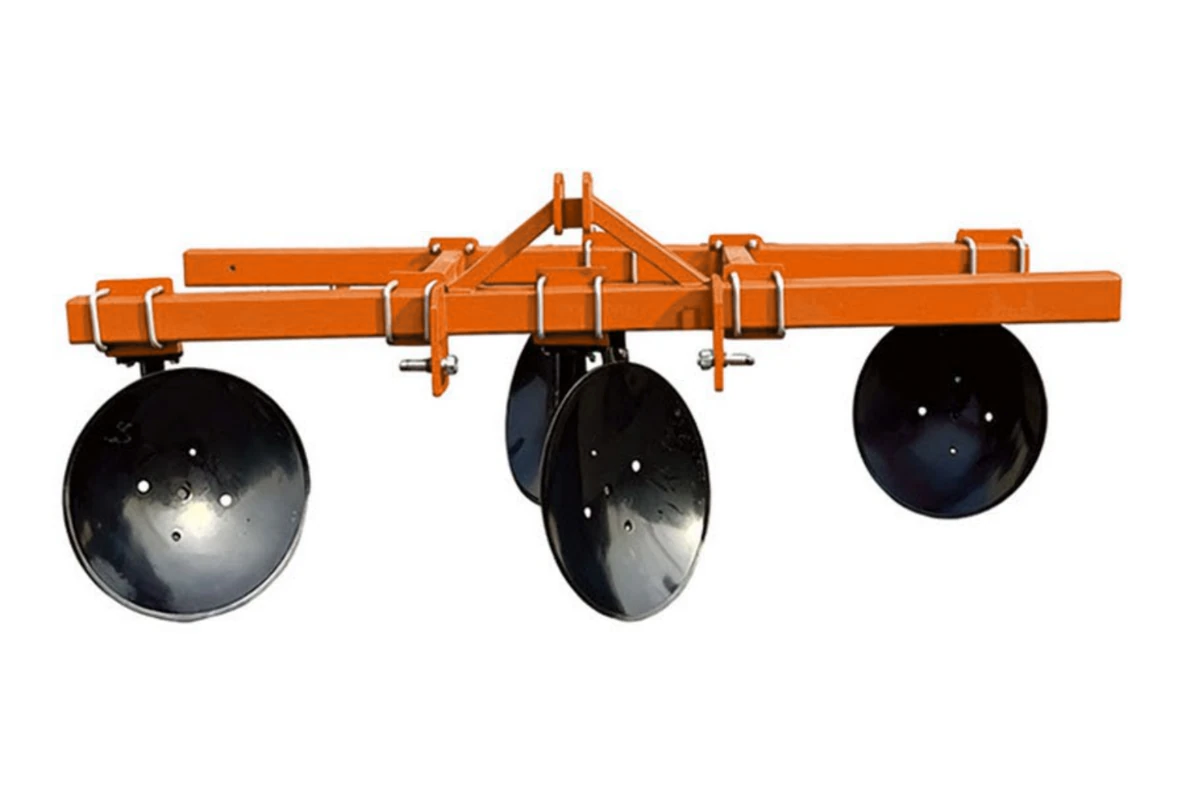


Additional photos show configuration examples. Colour and equipment may vary by model; please confirm your required configuration with your enquiry.
DL-DR disc ridger series
| DELIN Model | Ridge Number | Disc Number | Disc Diameter | Ridge Height | Weight | Linkage | Matched Power |
|---|---|---|---|---|---|---|---|
| DL-DR2L | 2 | 4 | 560 mm | ≥300 mm | 300 kg | Type I three-point mounted | 35–40 HP |
| DL-DR2H | 2 | 4 | 660 mm | ≥350 mm | 450 kg | Type II three-point mounted | 60–80 HP |
| DL-DR3H | 3 | 6 | 660 / 710 mm | ≥350 mm | 600 kg | Type II three-point mounted | 100–120 HP |
Final specifications vary by confirmed model and configuration.
Disc ridger selection guide
| DELIN Model | Best Use | Tractor Power | Main Difference |
|---|---|---|---|
| DL-DR2L | Small farms and lighter row-crop ridging | 35–40 HP | Light 2-ridge model with 560 mm discs |
| DL-DR2H | Standard 2-ridge work in prepared fields | 60–80 HP | Heavier frame and 660 mm discs |
| DL-DR3H | Higher-output 3-ridge operation | 100–120 HP | 3-ridge structure with 660 / 710 mm discs |
Key features
Three-point hitch frame
Mounted hitch frame connects the ridger to the tractor for field operation, lifting and transport.
Main toolbar beam
Rigid toolbar supports the disc ridging units and allows row spacing adjustment according to crop layout.
Paired disc blade units
Each ridge is formed by paired disc blades that gather soil from both sides into a raised ridge shape.
Disc mounting brackets
Disc brackets hold the disc blades at the required working position and support adjustment for different ridge profiles.
Ridge forming plates
Forming plates help guide soil flow and improve ridge shape after the discs gather soil.
Locking clamps and bolts
Clamp hardware fixes the ridging units on the toolbar and allows adjustment during model setup or row-spacing changes.
Applications
Best-fit scenarios
• Corn ridge forming before planting
• Potato ridge forming
• Vegetable field ridging
• Prepared farmland after plowing or rotary tillage
• Row-crop fields requiring adjustable spacing
• Farms using 35–120 HP tractors
Not recommended for
• Primary soil breaking
• Deep tillage
• Hard, unprepared land
• Heavy residue fields before soil preparation
• Land reclamation work
• Fine seedbed finishing
Customization options
Row and ridge options
• 2-ridge configuration
• 3-ridge configuration
• Ridge spacing adjustment
• Ridge height requirement confirmation
Disc options
• 560 mm disc
• 660 mm disc
• 710 mm disc by model
• Disc thickness and steel specification by order requirement
Tractor matching options
• Type I three-point hitch
• Type II three-point hitch
• Tractor power matching
• Toolbar width confirmation
Branding and export options
• Paint color
• Logo and label
• Model name
• Export packing
• Spare disc and wear part supply
Why this machine exists
A disc ridger exists for one specific stage of row-crop farming: forming ridges after the soil has already been prepared.
It is not a plow, harrow or rotary tiller. Its job is to shape loose soil into raised ridges before planting.
For distributors, this machine is useful because many row-crop customers do not need a complex ridging system. They need a simple mounted tool that matches tractor power, crop spacing and local planting habits.
Why choose delin agricultural machinery
For disc ridgers, reliable field performance depends on toolbar straightness, disc blade quality, bracket fitment, clamp locking strength and hitch alignment.
DELIN Agricultural Machinery focuses on toolbar welding control, disc blade steel specification, mounting bracket accuracy, clamp hardware fitment and pre-shipment assembly inspection.
These details help the ridger keep a stable working position and form consistent ridges in prepared row-crop fields.
Faq
Q1: what is a disc ridger used for?
It is used for forming raised ridges before planting row crops such as corn, potatoes and vegetables.
Q2: is it used before or after tillage?
It is used after basic tillage. The soil should already be loosened before ridge forming.
Q3: what is the difference between a disc ridger and a shovel-type ridger?
A disc ridger uses paired round discs to gather and shape soil. A shovel-type ridger uses fixed ridging bodies. Disc ridgers are usually selected when smoother soil flow and adjustable ridge spacing are important.
Q4: how many ridges can it form?
The DL-DR series includes 2-ridge and 3-ridge models.
Q5: what tractor power is required?
The reference range is 35–120 HP depending on model.
Q6: can ridge spacing be adjusted?
Yes. Ridge spacing can be adjusted through the toolbar and mounting brackets according to crop row requirements.
Q7: can it be used for potatoes?
Yes. It is suitable for potato ridge forming when the required ridge width and tractor power match the selected model.
Q8: can it break hard soil?
No. It is not designed for primary tillage or hard soil breaking. Use a plow, disc harrow or rotary tiller before ridging.
Q9: can OEM branding be supplied?
Yes. Color, logo, model name and packaging can be customized for distributors.
Q10: what should buyers confirm before ordering?
Tractor HP, crop type, row spacing, required ridge height and field soil condition should be confirmed before selecting the model.
Inquiry message
Please send your tractor HP, crop type, row spacing and required ridge height.
We will help check whether DL-DR2L, DL-DR2H or DL-DR3H is the better match for your field conditions.