Disc harrows
Rotary hay rake
DL-RHR
Pto-driven hay rake for forage gathering and windrow formation
The Rotary Hay Rake, also known as a hay rake or PTO rotary rake, is designed to gather cut hay or forage into windrows after mowing.
It does not cut grass. It works after disc mowers or drum mowers, using PTO-driven rotating tine arms to gather material into rows for drying, collection or baling.
The DL-RHR series is three-point mounted and PTO-driven, with foldable transport structure by model. It is suitable for small to medium pasture systems, haymaking operations and forage collection, covering raking widths from 2.5 to 5.0 m and tractor matching from 30 to 100 HP.

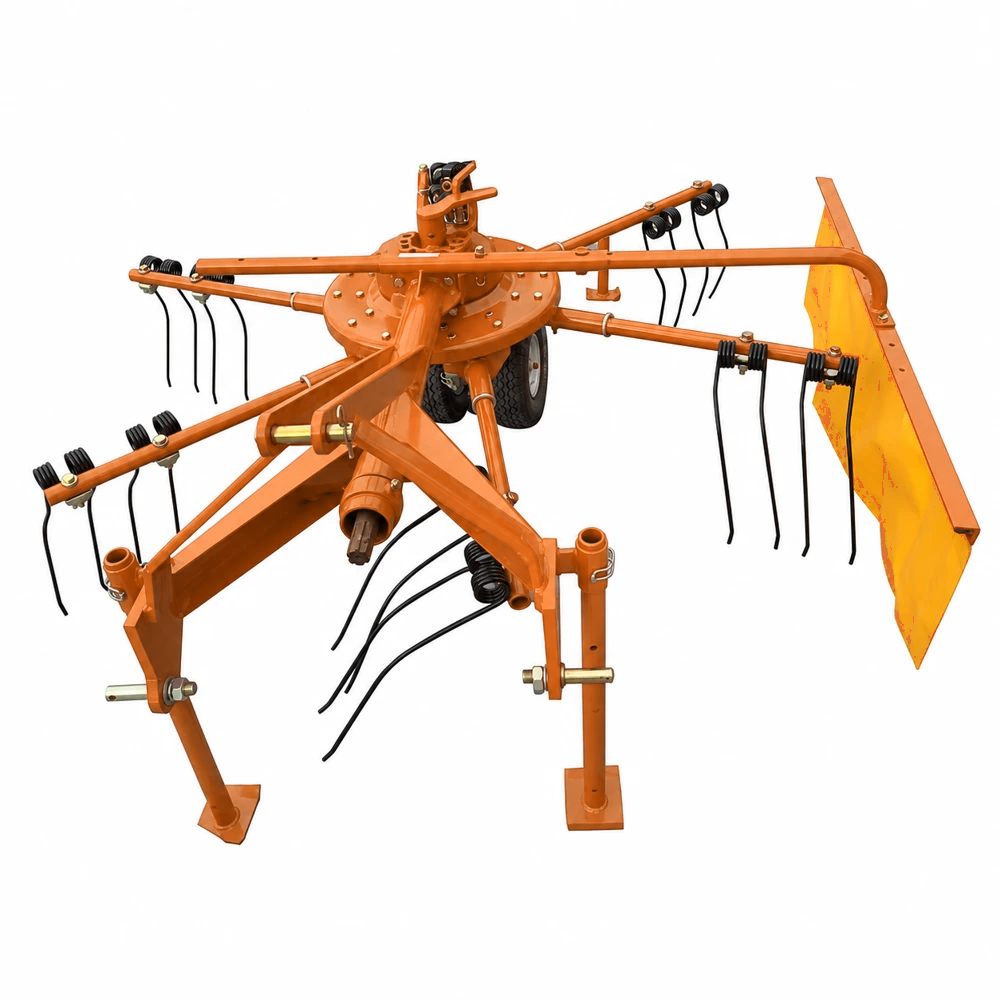
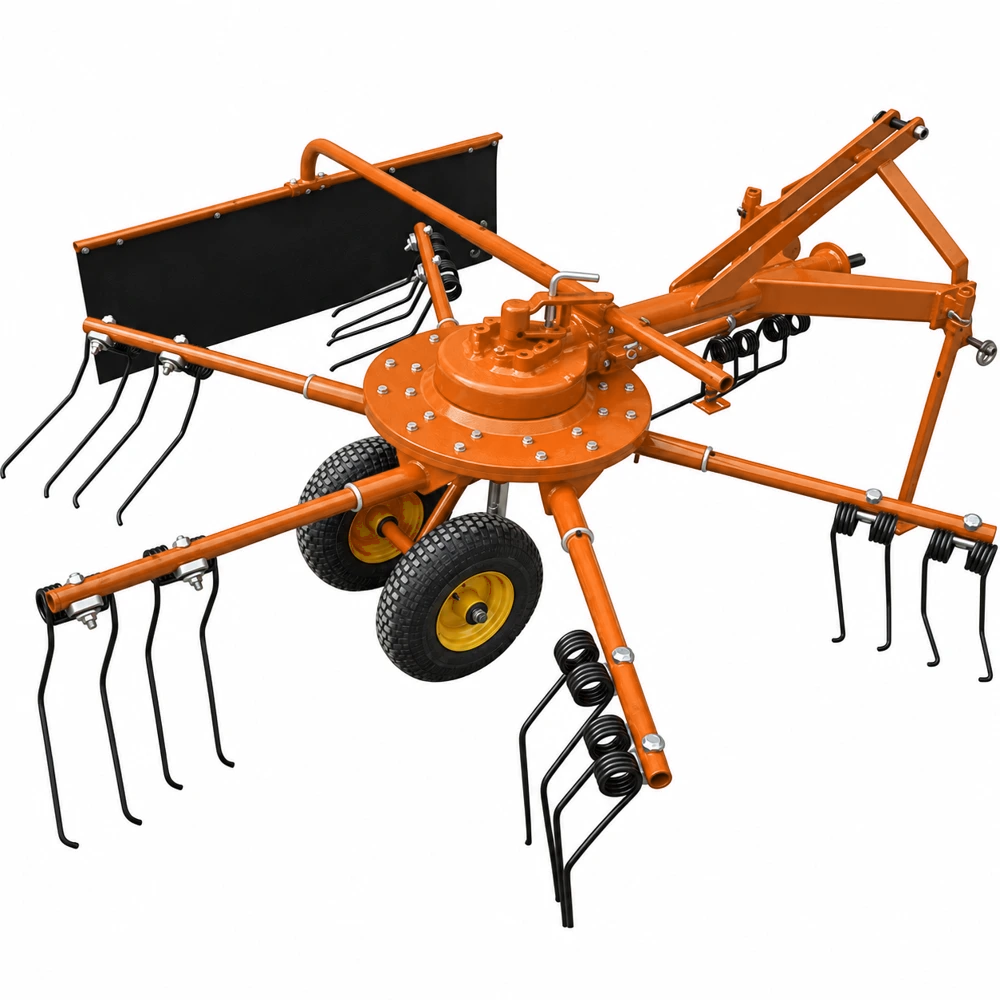
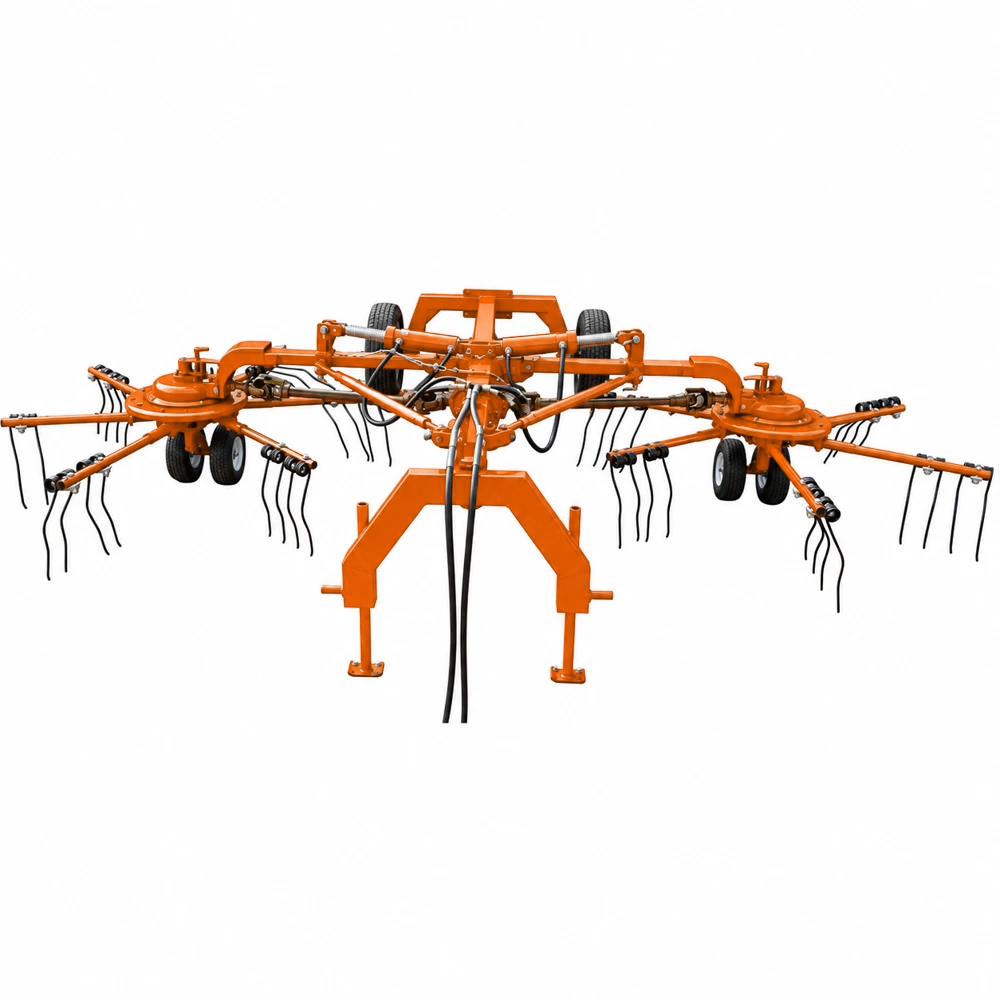
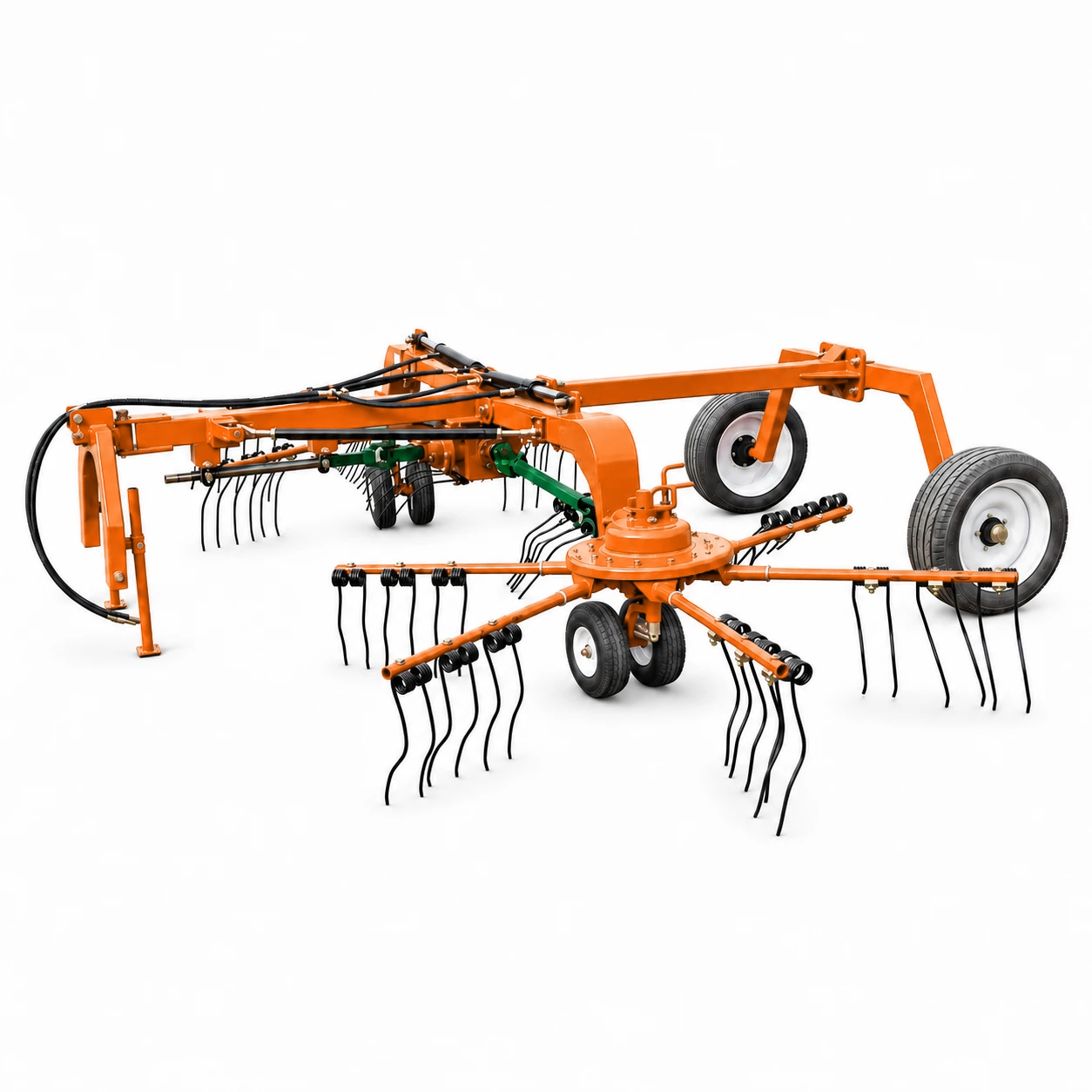
DL-RHR rotary hay rake series
| DELIN Model | Tine Configuration | Raking Width | Packing Size | Weight | Matched Power | Productivity |
|---|---|---|---|---|---|---|
| DL-RHR25 | 2×6 | 2.5 m | 1550 × 1000 × 800 mm | 200 kg | 30–70 HP | 2–2.6 ha/h |
| DL-RHR35 | 2×6 | 3.5 m | 2000 × 1000 × 800 mm | 233 kg | 50–80 HP | 3–4 ha/h |
| DL-RHR50 | 2×6×2 | 5.0 m | 2000 × 1000 × 1000 mm | 707 kg | 70–100 HP | 4–5 ha/h |
Final specifications vary by confirmed model and configuration.
Rotary hay rake selection guide
| DELIN Model | Raking Width | Tine Configuration | Weight | Matched Power | Productivity |
|---|---|---|---|---|---|
| DL-RHR25 | 2.5 m | 2×6 | 200 kg | 30–70 HP | 2–2.6 ha/h |
| DL-RHR35 | 3.5 m | 2×6 | 233 kg | 50–80 HP | 3–4 ha/h |
| DL-RHR50 | 5.0 m | 2×6×2 | 707 kg | 70–100 HP | 4–5 ha/h |
Rotary hay rake vs mower vs baler
| Item | Rotary Hay Rake | Drum / Disc Mower | Baler |
|---|---|---|---|
| Main Use | Hay and forage gathering | Grass and forage cutting | Hay collection and baling |
| Working Stage | After cutting | Before raking | After raking |
| Field Result | Material gathered into windrows | Grass cut for drying | Hay packed into bales |
| Main Structure | Rotating tine arms | Cutting discs / drums | Pickup and baling chamber |
| Selection Logic | Choose when cut material needs gathering | Choose when forage needs cutting | Choose when hay needs packing |
Rotary hay rake vs finger wheel rake
| Item | Rotary Hay Rake | Finger Wheel Rake |
|---|---|---|
| Working Principle | PTO-driven rotating tine arms | Ground-driven finger wheels with spring tines |
| Tractor Range | 30–100 HP by model | 20–40+ HP by model |
| Structure | Gearbox, tine arms and frame assembly | Wheel-based raking structure |
| Windrow Formation | Controlled windrow formation | Simple windrow formation |
| Maintenance Focus | Tine arms, bearings, gearbox, hydraulic parts | Spring tines, wheel hubs, bearings |
| Choose When | Windrow control and rake capacity matter | Simple structure and easy maintenance matter |
Both machines gather cut forage into windrows. The choice depends on tractor power, field size, mower output, windrow requirement, operating budget and maintenance preference.
Key features
PTO gearbox and drive shaft
Transmits tractor power to the rotary tine arm assembly for field operation.
Rotary tine arm assembly
Uses rotating tine arms to gather cut forage into windrows.
Spring tine set
Contacts the hay during operation and moves forage into rows.
Hydraulic lift cylinder assembly
Supports lifting, lowering and transport folding by confirmed model.
Three-point hitch frame
Connects the rake to the tractor for lifting, transport and field operation.
Foldable transport frame
Supports transport folding and helps reduce transport size between fields.
Main frame beam
Supports the rake structure and maintains working alignment during field use.
Applications
Best-fit scenarios
• Gathering cut hay into windrows after disc mower or drum mower operation
• Forage and straw collection for silage or dry hay production
• Windrow formation before round or square baling
• Small to medium pasture haymaking operations
• Farms using 30–100 HP tractors for raking work
• Mixed farming with livestock feeding requirements
• Distributors supplying hay raking equipment
• Customers requiring controlled windrow formation
• Operations where rake output affects baler pickup efficiency
Not recommended for
• Cutting standing grass, because this is a rake, not a mower
• Heavy residue shredding or mulching
• Heavy stone fields that may damage tines or gearbox
• Very wet or muddy conditions where material may stick to tines
• Lawn or turf finishing where surface appearance is the priority
• Operating beyond safe tractor stability limits
Not sure which rake to choose?
Different raking jobs require different machines.
A rotary hay rake uses PTO-driven rotating tine arms and is selected when controlled windrow formation and rake capacity matter.
A finger wheel rake uses ground-driven finger wheels and is selected when simple structure, easy maintenance and lower tractor power matching are the priority.
If you are comparing rotary hay rakes, finger wheel rakes or other rake types, check the rake category before ordering.
The key questions are:
What mower was used before raking?
What windrow structure does the customer need?
What baler pickup width will be used next?
Not sure which hay machine to choose?
Different haymaking jobs require different machines.
A mower cuts the grass.
A rake gathers the cut material.
A baler packs the hay after drying.
If you are comparing drum mowers, disc mowers, finger wheel rakes, rotary hay rakes or balers, check the hay equipment category before ordering.
The key question is which stage of the haymaking process the customer needs to complete.
Customization options
Raking width options
• 2.5 m
• 3.5 m
• 5.0 m
Rotary hay rake configuration options
• Tine arm configuration by model
• Spring tine type and specification
• Foldable transport frame configuration
• Hydraulic lift configuration
• PTO drive configuration
Tractor matching options
• Matched tractor power range
• Three-point linkage category confirmation
• Tractor PTO capacity confirmation
• Tractor lift capacity confirmation for heavier models
Spare parts options
• Spring tines
• Tine arm parts
• Bearing parts
• PTO-related parts by model
Branding and export options
• Paint color
• Logo and private label
• Data plate information
• Export packing method
• Container loading plan
Why this machine exists
Haymaking does not end after cutting.
After forage is cut, it needs to be gathered into windrows before drying, collection or baling. If the cut material remains scattered, the next field operation becomes harder to manage.
The Rotary Hay Rake exists for this gathering stage. It uses PTO-driven rotating tine arms to move cut forage into rows so that material can move into the next haymaking process more smoothly.
For distributors, it fills the equipment position after mowers and before balers, serving customers who need controlled windrow formation for small to medium pasture systems.
Why choose delin agricultural machinery
For rotary hay rakes, stable field performance depends on gearbox installation, tine arm bracket accuracy, spring tine material, rotor hub alignment, bearing seat fitment, hydraulic cylinder sealing, folding frame reliability and three-point hitch strength.
DELIN Agricultural Machinery focuses on main frame welding control, gearbox mounting accuracy, tine arm bracket machining, rotor hub alignment, spring tine installation, hydraulic cylinder testing, bearing housing assembly, folding structure checks, hitch frame welding and pre-shipment tine rotation and PTO operation checks.
These details help the hay rake perform stable forage gathering while remaining practical for field use, transport and export supply.
Faq
Q1: what is a rotary hay rake used for?
It is used for gathering cut hay, forage and straw into windrows after mowing.
Q2: is a rotary hay rake a mower?
No. A mower cuts standing grass. A rotary hay rake gathers material that has already been cut.
Q3: when should I use a rotary hay rake?
Use it after mowing and before baling, when cut forage needs to be gathered into windrows.
Q4: what is the difference between a rotary hay rake and a finger wheel rake?
A rotary hay rake uses PTO-driven rotating tine arms. A finger wheel rake uses ground-driven finger wheels with spring tines.
Q5: does a rotary hay rake need PTO connection?
Yes. The DL-RHR series is PTO-driven and requires tractor PTO connection.
Q6: what tractor power is required?
Matched tractor power ranges from 30–100 HP depending on model.
Q7: what raking widths are available?
Available raking widths are 2.5 m, 3.5 m and 5.0 m.
Q8: what is the productivity range?
Depending on model, productivity ranges from 2 to 5 ha/h.
Q9: can it collect straw or residue?
It is mainly used for cut forage and hay gathering. Straw or light residue suitability should be confirmed according to material condition.
Q10: is it foldable for transport?
Yes. The DL-RHR series uses a foldable transport structure by model.
Q11: can spring tines be replaced?
Yes. Spring tines are replaceable wear parts. Replacement frequency depends on usage intensity, material type and field condition.
Q12: what happens if the field has stones?
Stones may damage or bend tines and may affect gearbox or hydraulic components during operation. Heavy stone conditions require caution.
Q13: what should buyers confirm before ordering?
Please confirm tractor HP, PTO type, lift capacity, mower type, field size, required windrow width, baling method and whether transport on public roads is needed.
Inquiry message
Please send your tractor HP, PTO type, lift capacity, mower type, field size, required raking width and baling method.
We will help check whether DL-RHR25, DL-RHR35, DL-RHR50, a finger wheel rake or another rake type is more suitable for your hay gathering requirement.